
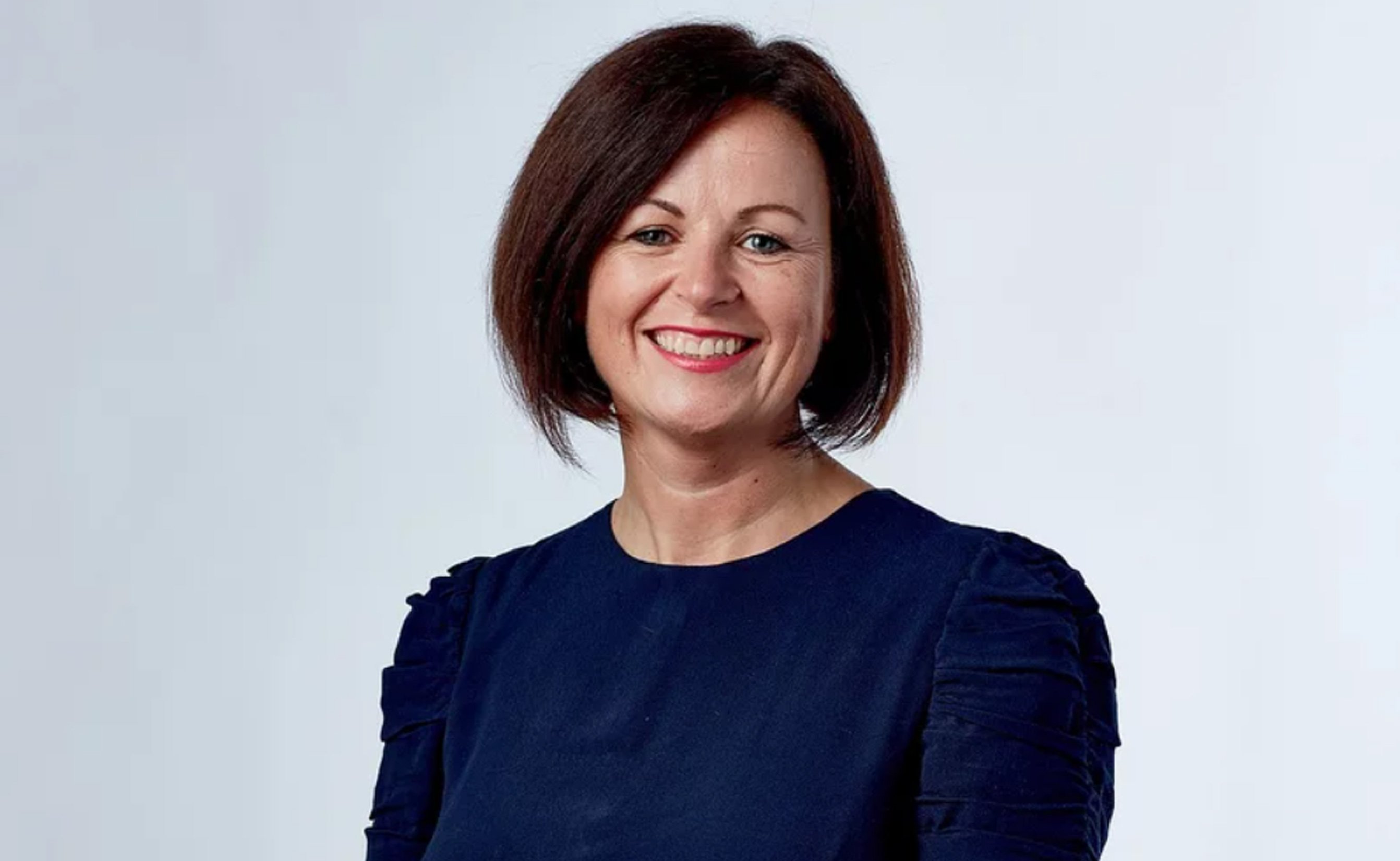
Welcoming Grace Rothery, ENSEK’s New Chief of Staff
We’re delighted to introduce Grace Rothery as ENSEK’s new Chief of Staff. Grace joined ENSEK in 2021 from Gazprom Energy, where she was Head of UK Retail, and has since held senior leadership roles at ENSEK — including UK Managing Director and Chief Customer Officer — giving her a broad perspective across the business. With over a decade of experience leading teams in the energy sector and driving customer success, she brings a unique blend of strategic insight and hands-on operational know-how.
Grace steps into the Chief of Staff position at a pivotal moment, as ENSEK doubles down on a product-led strategy amid rapid growth. Known for her authentic, down-to-earth leadership style, Grace will focus on turning strategy into action by enabling alignment, clarity, and execution across the organisation. Her experience in leading through change and her commitment to clear communication will be instrumental as ENSEK accelerates its next phase of growth.
In this Q&A, Grace shares her early priorities in the new role, how she approaches leadership and transformation, and what she’s learned about driving change (including the importance of transparency and trust). She also offers advice for those stepping into broader leadership roles.
You’ve taken on the Chief of Staff position at a pivotal time for ENSEK. What are your early priorities, and how are you approaching them?
Grace Rothery: It’s an exciting time to step into the role. My early priorities are clear: first, turn our strategy into delivered action by working across an aligned leadership team. We have ambitious goals, so it’s about making sure we not only define the strategy but actually execute on it.
Second, make ENSEK truly product-led in how we build and deliver — putting customer needs at the centre of how we design and release our products — so we can create better outcomes for customers faster and open up new opportunities. This product-led transformation touches every part of the business, and I’ll be driving the activities needed to enable it.
Third, embed OKRs (Objectives and Key Results) across the organisation so that everyone can see exactly how their work contributes to our broader goals. When every team and individual understands the direction and their part in it, we can move together much more effectively.
As for my approach, I’m focusing on what I do best: communicating clearly, building alignment through trusted relationships, and solving problems proactively as they arise. For me, that means being transparent about our priorities and progress, bringing people together around shared objectives, and addressing issues directly. I believe in creating an environment of trust – when people are aligned and understand each other, we can move quickly. It’s all about creating clarity, keeping everyone focused on what matters most, and removing obstacles so the whole organisation can succeed.
What’s the biggest shift or opportunity you see for ENSEK in 2026, and how do you see your role helping to unlock it?
Grace Rothery: The biggest opportunity for us in 2026 is to hardwire product-led thinking into everything we do. We’re making a significant shift from how we’ve operated in the past few years – moving to truly product-led delivery. Why is that important? Because it will allow us to deliver improvements to customers more quickly and effectively, and it opens up opportunities to enter new markets and serve new customers. In short, if we become fully product-led, we can scale our impact and reach in a big way. It’s not just a process change; it’s a mindset change for the company, and it will help ENSEK accelerate the energy transition by innovating faster.
My role in unlocking this is to align the business on the few things that matter most and keep us all focused. A product-led transformation affects every part of the organisation, so someone needs to ensure all the strands come together. I see myself as the one bringing those strands together – making sure that product, engineering, operations, and customer teams are all moving in the same direction.
I’ll be keeping us focused on our top strategic priorities, so we maintain momentum and make visible progress. It’s about continually asking, “Is what we’re doing moving us toward our goals?” and if not, helping the team re-focus. By doing that, we can speed up execution and ensure that our customers see steady, continuous improvement in the services we deliver.
You’ve worked across different parts of the business – from UK Managing Director to Chief Customer Officer to now Chief of Staff. What’s stayed constant in your leadership approach, and what’s evolved?
Grace Rothery: The constants have been my core values and style. I’ve always believed in being authentic, approachable, and straight-talking. I’m the same person at work as I am outside of work – being yourself is so important to building trust. I make a point of building trusted relationships early on; once that trust is established, everything else – alignment, collaboration – becomes much easier. I also stay close to the team’s day-to-day realities. I try to be accessible and down-to-earth so that people feel comfortable bringing up challenges or ideas. In short, I invest in trust, I speak plainly, and I focus on my people – that’s always been my foundation as a leader.
What’s evolved is how I apply those values as I’ve gained experience and confidence. I’m much crisper about maintaining focus now, and faster at driving alignment around the things that really matter. In earlier roles I might have tried to tackle too many things at once; now I’m very clear on our top priorities and equally clear on what we’re not going to do. I’ve also become more comfortable saying “I don’t know – yet.” Early in your career, you feel you need to have all the answers; with experience, I’ve learned the power of bringing the right people together to figure out a solution rather than trying to solve everything myself.
Lastly, I’ve grown more disciplined in how we structure our rhythm of decision-making and communication. I’m very deliberate now about setting a good operating rhythm and being really clear on what we are going to do and, therefore, what we are not going to do – and making those trade-offs. In essence, I’m more focused and decisive, and I have no issue admitting when I don’t know something and then quickly getting experts in the room to help find the answer.
What’s something you’re keen to improve or simplify in how we work together as a business?
Grace Rothery: I’m keen for us to truly work as one business with one strategy, one plan, and one set of goals. It all starts at the top: we need a clear north-star direction for ENSEK, and then we cascade that into a single coherent plan for everyone. If we have one unified strategy and everyone knows what it is, we can avoid confusion and wasted effort. I want to see clear ownership and accountability for each piece of that plan, but also strong alignment across teams so we’re all pulling in the same direction.
Alongside that, I’d like to simplify our internal processes so it’s easier to get things done. For example, we should have fewer, more purposeful forums for decision-making. We currently communicate in a lot of meetings and channels; I want to streamline those so that when a decision needs to be made or a problem needs solving, the right people are at the table and we resolve it quickly. In short, by clarifying our direction and enabling people to act – while also reducing unnecessary complexity in how we collaborate – we’ll be able to move faster and work smarter as a unified team.
What’s one lesson you’ve learned about leading through change that’s stuck with you?
Grace Rothery: One big lesson is that consistent, clear communication matters more than anything. In times of change, you almost cannot communicate enough. People need to hear – and then hear again – where we’re going and why. I’ve learned to repeat the message until it sticks: the goals, the priorities, how each person’s work connects to the bigger picture. Change feels a lot less overwhelming when everyone understands the direction and is reminded of it regularly. My job as a leader is to keep reminding us what we’re aiming for, why it matters, and what’s coming next – almost to the point of over-communicating – because when I think I’ve said something enough, that’s probably when it’s just starting to land for everyone.
Along with that, I’d say transparency is crucial for building trust through change. Of course, every leader wants to be transparent, though sometimes there are things you can’t share immediately. I’ve found that even when you can’t divulge everything, you can still be honest about what’s going on. It’s OK to say, “We’re working on this issue, we don’t have all the answers yet, but we will let you know as soon as we do.” That kind of openness goes a long way.
People can handle change; what unsettles them is being caught by surprise or feeling that information is hidden. By being clear and upfront – even about uncertainties – you reduce surprises and show your team that you trust them with the truth. And in return, they’re more likely to trust you as you lead them through the change.
What advice would you give to someone stepping into a broader leadership role for the first time?
Grace Rothery: My advice would be:
- Be yourself, and be clear. Don’t feel you need to adopt someone else’s persona as a leader. Authenticity and straight-talking build trust faster than anything else. If you are genuine and communicate plainly, people will respond to that.
- Use OKRs well. Objectives and Key Results are a fantastic focus tool if used properly – they’re not meant to be a form-filling exercise. Set clear goals and use OKRs to keep everyone aligned and accountable, rather than treating them as a tick-box exercise.
- Don’t be afraid to say “I don’t know.” If you don’t have the answer, say so – quickly – and then go find out. Admitting that you don’t know something shows confidence, not weakness. It invites others to contribute their expertise and it creates a culture where finding the right answer matters more than pretending you already have it.
By being authentic, staying focused on what matters, trusting your team, and being humble about what you don’t know, you’ll set a strong foundation for effective leadership. These are things that have served me well, and I remind myself of the same advice even now. Good luck – and enjoy the journey!
See how ENSEK is accelerating transformation and embedding product-led thinking through clear, connected leadership.